 how-to
How to Verify Licensed Contractors Before Hiring in 2026
Table of Contents
- What You'll Need Before You Start Verifying a Contractor
- How to Verify Licensed Contractors Using Official State Databases
- How to Check Contractor Insurance and Bonding
- Signs of an Unlicensed Contractor and Red Flags of Fake Licenses
- Questions to Ask a Contractor Before Hiring
- How to File a Complaint and Check License Expiration
- Frequently Asked Questions
Last Updated: September 18, 2026
What You'll Need Before You Start Verifying a Contractor
Verifying a contractor means checking the license, insurance, and registration records a state keeps on file before you sign anything. To verify licensed contractors properly, gather a few basics first. This guide from Wize Builders walks through the exact records to pull and where to find them.
Here is your starting kit:
- The contractor's full legal name and business name
- Their license number, if they gave you one
- Your state's licensing board website
- A notebook or spreadsheet to log results
- The contractor's certificate of insurance
How to Verify Licensed Contractors Using Official State Databases
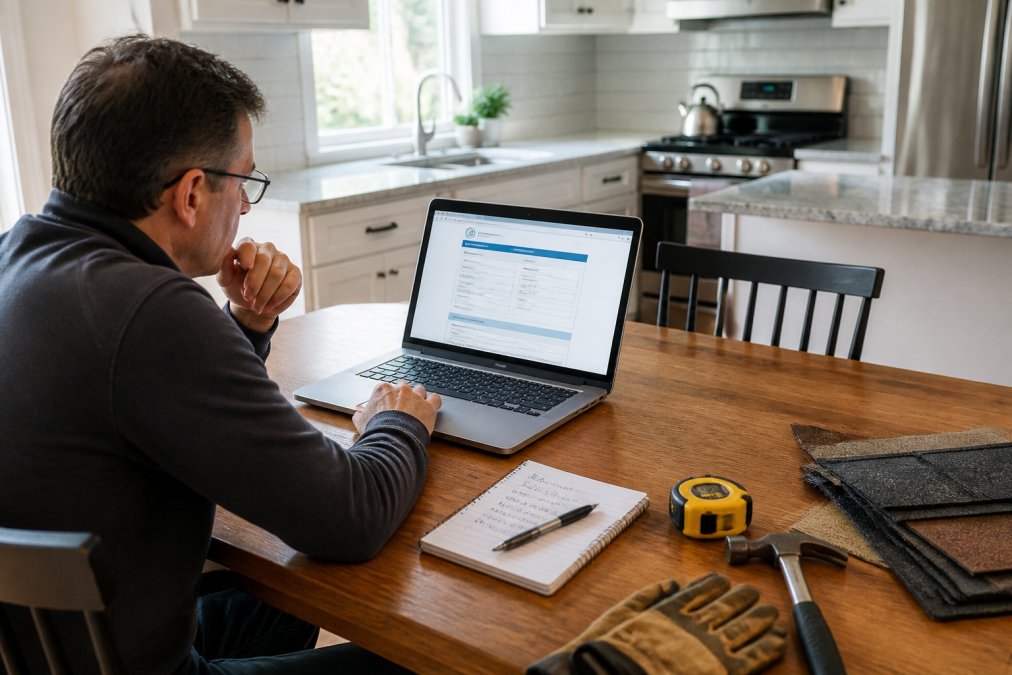
The fastest way to verify licensed contractors is through your state's official licensing board database, not a third-party site. These portals are free, updated by the licensing agency, and most let you search three ways.
Search by License Number
Search by license number when the contractor hands you one. Type it exactly as written, including letters or dashes.
Search by Contractor Name or Business Entity
Search by contractor name or business entity when you only have a company name. Try both the personal and registered business name, since records sometimes list one but not the other.
Confirm Active Status, Trade Classification, and Disciplinary Action
Confirm three things on every record: active status, trade classification, and any disciplinary action. Active status means the license is valid right now; trade classification tells you what work the licensee may perform.
How to Check Contractor Insurance and Bonding
Checking insurance and bonding means requesting certificates directly, reading them line by line, then calling the carrier to confirm the policy is real and active. Most competitors stop at "ask for a certificate", the part they skip is what to look for once you have it.
Ask for three documents, not two:
- A certificate of liability insurance (often called a COI or ACORD 25 form)
- Proof of workers' compensation coverage, or a state-approved exemption if the contractor has no employees
- The surety bond number and the bonding company's name, if your state requires a bond
How to Read a Certificate of Liability Insurance
A COI is a one-page snapshot, not the policy itself. It shows what the contractor carries but does not prove the policy is still in force, carriers issue COIs at the start of a term and the policy can cancel mid-term. That is why the phone call matters.
Read these fields on the COI:
- Named insured. The legal name must match the contractor's license record and the name on your contract. A mismatch is a red flag.
- Policy effective and expiration dates. If the expiration date falls before your project's finish date, the coverage may lapse mid-job.
- General aggregate limit. The total the policy pays across all claims in a period. A $1 million per-occurrence limit with a $1 million aggregate means one big claim can exhaust it.
- Certificate holder. This is who the carrier sent the COI to. If your name is not on it, ask why.
- Additional insured endorsement. The field most homeowners miss. Being listed as an additional insured means the contractor's liability policy can defend you if you are sued over their work. Ask to be added before work starts; it usually costs them little or nothing.
How to Verify Workers' Compensation Coverage
Workers' compensation covers injuries to the contractor's own crew. If a worker is hurt on your property and the contractor has no coverage, the claim can land on your homeowners policy or on you directly. Verify it the same way you verify liability: call the carrier and confirm the policy number, named insured, and effective dates.
Insurance vs. Bonding: What Each One Actually Does
People mix these up constantly. They are not interchangeable and pay out in different situations.
| Protection | What It Covers | Who Pays | How You Claim |
|---|---|---|---|
| General liability insurance | Third-party property damage and injuries | The injured party or homeowner, up to policy limits | File a claim with the carrier |
| Workers' compensation | Injuries to the contractor's own employees | The injured worker | Worker files with the carrier |
| Surety bond | Financial loss from unfinished, faulty, or abandoned work | The homeowner, up to the bond amount | File a claim against the bond with the surety |
The Verification Call Script
When you call the carrier or surety, have the certificate in front of you and ask four questions:
- Is policy number [number] active as of today?
- What is the named insured on that policy?
- What are the effective and expiration dates?
- Can you email me written confirmation of coverage?
Signs of an Unlicensed Contractor and Red Flags of Fake Licenses
The clearest sign of an unlicensed contractor is a refusal to provide a license number in writing. Other warning signs show up fast once you know what to look for.
Watch for these red flags:
- A price that undercuts every other bid by a wide margin
- A request for full payment upfront or cash only
- No written contract, or a contract with no license number on it
- A license number that returns no record in the state database
- A business name that changes between the estimate and the contract
- Pressure to sign today because "the price goes up tomorrow"
Questions to Ask a Contractor Before Hiring
The right questions to ask a contractor before hiring cover licensing, insurance, permits, and timelines. Ask before you sign, and get answers in writing.
Run through this pre-hiring checklist:
- What is your license number, and what trade does it cover?
- Can you show a certificate of insurance and a workers' comp policy?
- Who pulls the permit, you or me?
- Will you use subcontractors, and are they licensed too?
- What is the start date and the expected finish date?
- What does the written contract include for change orders?
- What warranty covers the work after completion?
How to File a Complaint and Check License Expiration
Filing a complaint starts with your state's licensing board, the agency that issued the license. Most boards accept complaints online for free. But a complaint is only one of three remedies, bond claims and recovery funds are the two most homeowners never hear about until it is too late.
How to File a Complaint With the Licensing Board
Before you file, gather your evidence:
- The written contract and any change orders
- Photos of the work, the damage, or the incomplete job site
- Receipts, canceled checks, and payment records
- Copies of texts, emails, and voicemails with the contractor
- The contractor's license number and the date you verified it
Then submit the complaint through the board's portal. Boards can fine, suspend, or revoke a license, and that record becomes part of the contractor's public file, which is why checking disciplinary action matters for the next homeowner too.
How to File a Claim Against a Contractor's Bond
If your state requires contractors to carry a surety bond, you can claim against it when the contractor abandons the job, fails to pay subcontractors, or performs work that violates the contract.
Here is the mechanism:
- Identify the surety company from the contractor's license record or the bond certificate.
- Request a claim form from the surety in writing.
- Submit the claim with your contract, proof of payment, and evidence of the loss.
- The surety investigates and pays valid claims up to the bond amount.
How to Check for a State Recovery Fund
Many states operate a recovery fund (also called a homeowner, guaranty, or contractor recovery fund) that pays homeowners harmed by licensed contractors who cannot pay a judgment. Rules vary widely by state, but common features include:
- You must first obtain a court judgment against the contractor, or exhaust the bond claim.
- There is a per-claim cap and a per-contractor cap.
- The fund typically does not cover unlicensed contractors, only licensed ones who failed to pay.
- Filing deadlines apply, often measured from the date of the judgment or the date you discovered the loss.
How to Check License Expiration and Re-Verify Mid-Project
License expiration deserves its own check and is not a one-time task. Set a reminder to re-verify before work begins if your project starts weeks after you sign, and again at any major milestone, framing, rough-in, final inspection. Licenses lapse: a contractor who lets a license expire mid-project can lose the right to pull permits, stalling any inspection tied to that permit.
A quick re-verification takes two minutes:
- Return to the state board's lookup portal.
- Search the license number.
- Confirm the status still reads active and the expiration date is still in the future.
- Note the date you checked.
What to Do If the Contractor Is Unlicensed
For unlicensed work, you have fewer options. Recovery funds generally exclude unlicensed contractors, and bond claims require a bond an unlicensed contractor usually lacks. Your remaining paths are small claims court, civil court, or a consumer protection complaint with your state attorney general's office.
Frequently Asked Questions
What should I do if a contractor cannot provide a license number?
Walk away. In most states, a legitimate contractor can produce a license number on the spot, and you can confirm it through the state licensing board's lookup portal in minutes. If the contractor claims they are 'registered' but not 'licensed,' or says the number is at the office, treat that as a serious warning sign. Some states require registration for home improvement salespeople as well, so ask for that credential too. Without a verifiable number, you cannot confirm active status, insurance, bonding, or disciplinary history, which leaves you fully exposed if the work goes wrong.
How do I check if a contractor has active insurance and bonding?
Ask the contractor for a certificate of insurance showing general liability coverage and workers' compensation. Then call the insurance carrier directly using the number on the certificate, not a number the contractor gives you, to confirm the policy is active and the coverage limits are current. For bonding, request the bond holder's name and contact information, then verify with the surety company that the bond is still in force. A contractor bond protects you if the contractor fails to complete the job or violates permit requirements. Never accept a photocopy alone; confirm with the source.
Does a business license mean a contractor is qualified for exterior work?
No. A general business license only confirms the company registered to operate; it says nothing about trade qualifications. Exterior work like roofing, siding, and window installation often requires a specialty trade license or a specific trade classification on the contractor's license. In many states, roofing and siding fall under different classifications, and a contractor licensed for one may not be authorized for the other. Always check the licensee type and trade classification on the state licensing board's record, and confirm the classification matches the work you need done.
Are there different license requirements for roofing versus siding contractors?
Often yes. Many state licensing boards issue licenses by trade classification, meaning a contractor may hold an active license for roofing but not for siding, or vice versa. Some states also separate general contractors from specialty trade contractors, and each has different scope limits. When you look up a contractor, check the specific classification listed on their record. If the classification does not cover your project, the contractor is not authorized for that work, even if their license is active. Ask the licensing board directly if you are unsure which classification applies.
Hiring an exterior contractor you cannot verify is a gamble with your home and your money. Wize Builders is a licensed NYC and Suffolk County exterior contractor, so you can check our credentials the same way you would check anyone else's. We offer a free estimate and $0 down financing, and we handle the permitting and installation from start to finish. Get started with Wize Builders and put a verified, licensed team on your roof, siding, windows, or doors.